
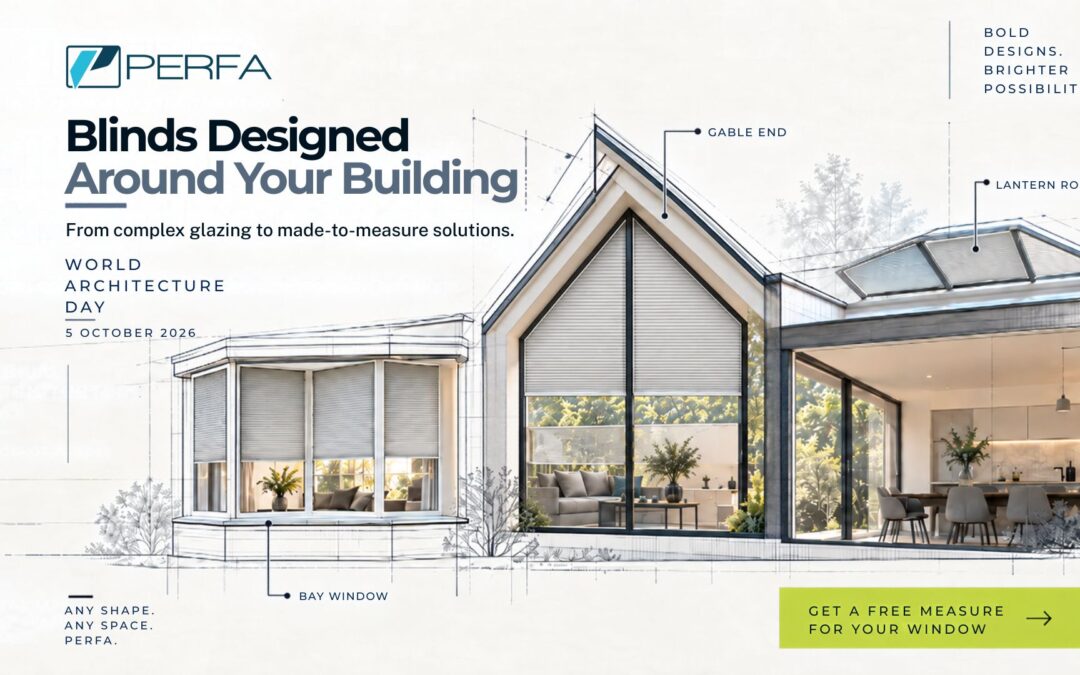
World Architecture Day: Tailoring Bespoke Window Blinds for Non-Standard Glazing
Modern UK architectural design frequently features distinctive window profiles—from dramatic apex glazing and vaulted ceilings to lantern roofs and traditional bay windows. While expansive glass fills interiors with natural light, non-standard window shapes require carefully planned shading to manage glare, temperature, and privacy.
To mark World Architecture Day, PERFA highlights practical ways our Barnsley factory creates made to measure shading for non-standard window layouts. For trade retailers, specifiers, and installers, offering clear solutions for unusual windows opens up valuable project opportunities.
Here is a straightforward overview of how we approach distinctive window architecture without unnecessary complexity.
1. Gable Ends and Apex Windows
Angled windows and triangular gable ends are popular features in modern extensions and barn conversions. Because standard rectangular blinds will not fit these shapes, custom planning is needed.
When providing bespoke window blinds for triangular or angled glass:
- Angled Honeycomb Blinds: Honeycell fabrics can be made with angled top rails to match the slope of the window frame, covering the glass neatly while helping keep rooms warm.
- Guided Fabrics: Internal tension wires guide the blind along the angle of the window frame so the fabric stays neat and aligned.
- Motorised Operation: Because apex windows are often high up, remote-controlled or wall-switch motorisation allows users to open and close blinds easily.
2. Lantern Roofs and Skylights
Flat-roof kitchen extensions and orangeries often feature large glass roof lanterns. Without shading, these areas can get overly warm in summer and lose heat during winter evenings.
Key approaches for lantern roof blinds include:
- Tensioned Frame Systems: Roof lantern blinds run along slim side channels with internal tensioning, keeping the fabric neat and supported across horizontal spans.
- Reflective Fabrics: Choosing blackout or solar-reflective fabrics helps block glare and manage heat throughout the year.
- Matching Frames: Cassette covers can be colour-matched to standard window frames so the blind blends neatly into the ceiling structure when pulled back.
3. Bay Windows and Curved Glass
Victorian angled bays, square box bays, and curved bow windows are common in UK homes. The main goal when fitting blinds in a bay window is ensuring adjacent blinds sit neatly together without leaving wide gaps.
Practical options for bay window blinds:
- Slim Hardware: Narrow headrails allow roller, Venetian, or Honeycell blinds to fit closely into bay corners.
- Frame-Fitted Systems: No-drill frame systems clip directly onto window beads, allowing blinds to open with the window handle and keeping sills clear.
- Curved Tracks: For large bow bays needing a single continuous treatment, custom curved tracks allow vertical blinds to glide smoothly around the full curve.
4. Simple, Precise Production for Unusual Shaped Window Blinds
Fitting non-standard windows relies on simple, accurate measurements and clear production processes. A good fit ensures blinds operate smoothly and look clean once installed.
Our UK production process supports trade installers every step of the way:
- Clear Measurement Checks: Installer measurements are checked prior to cutting to confirm angles and hardware clearances.
- Accurate Cutting: Custom components and bottom bars are trimmed precisely to fit the exact window dimensions.
- Rig Testing: Every specialized apex, roof, and unusual shaped window blinds order is tested on our factory rigs to check movement and tension before dispatch.
Partner with PERFA
Custom architectural window projects offer trade partners a straightforward way to expand their offer. By working with a reliable UK manufacturer, you can take on non-standard projects with confidence.
Log into the [PERFA Trade Portal] for order forms and product details, or contact our Barnsley trade team directly.
- Trade Desk: 01226 812122
- Freephone: 0800 488 0206
- Email: info@perfa.co.uk
- Trade Portal: www.perfa.co.uk